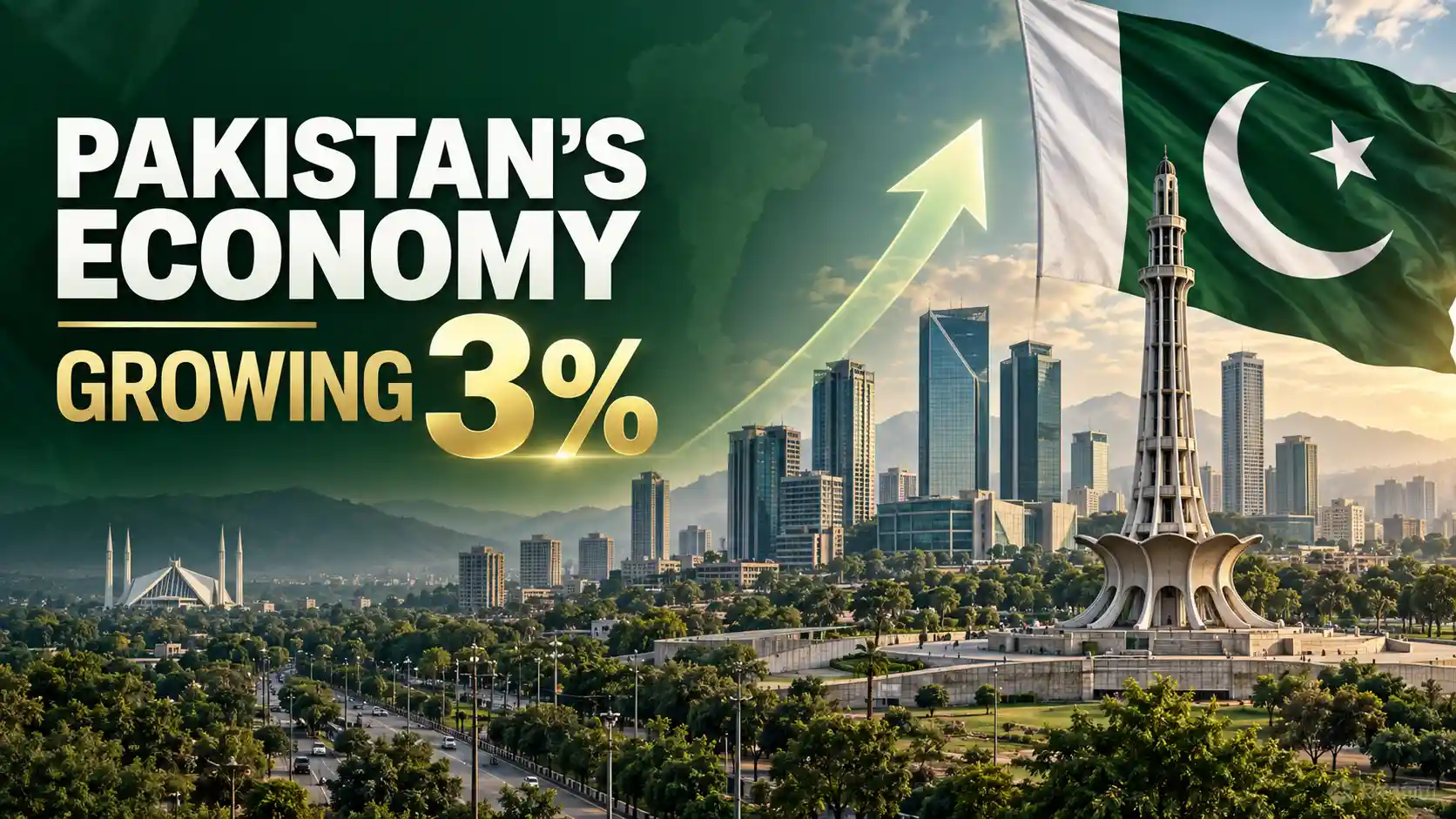
Pakistan’s Economy is Growing, 3% increase annually

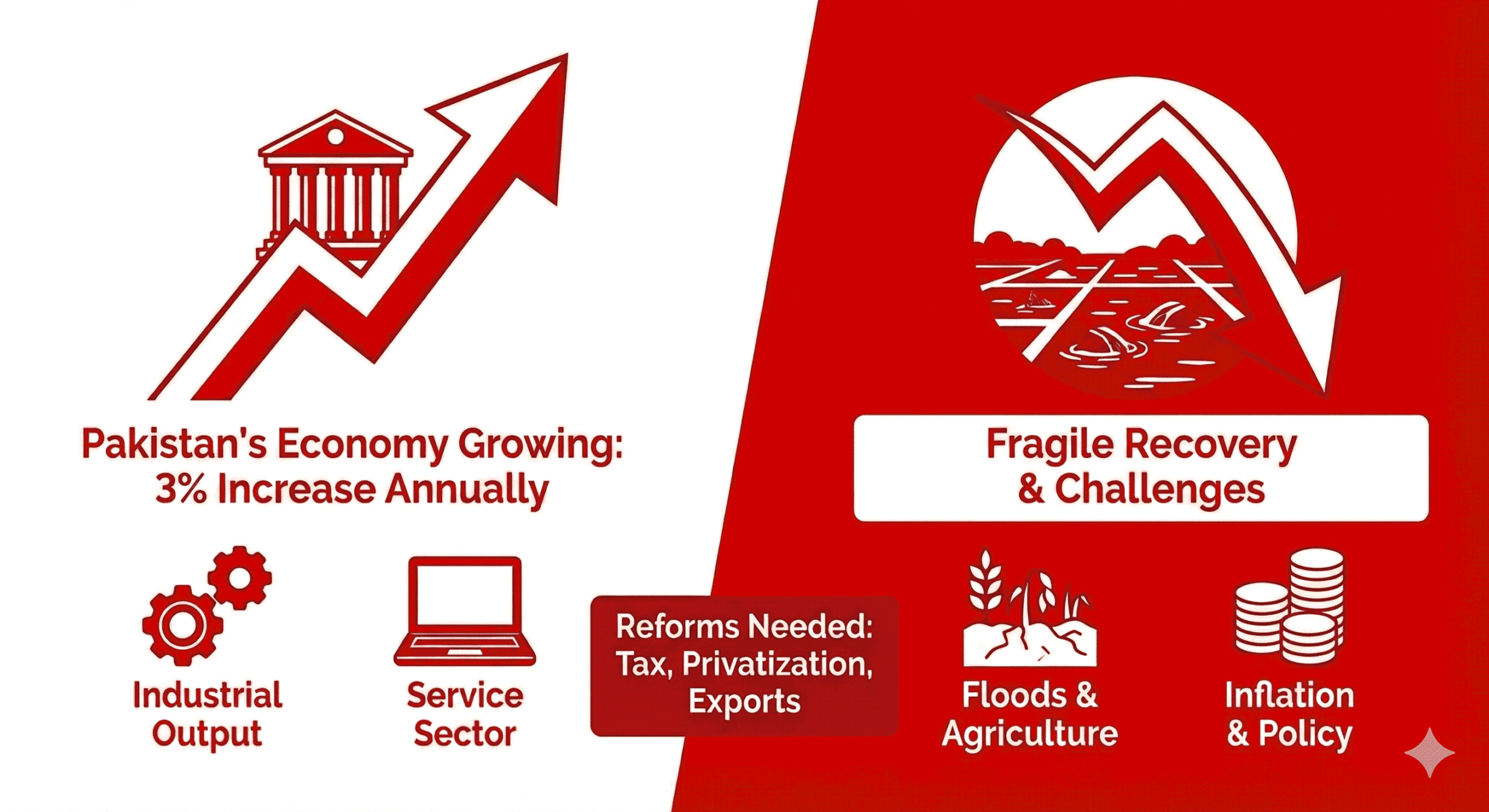
The fiscal year that ended in June 2025 saw indications of a revival in Pakistan’s economy. Growth increased to 3.0% from 2.6% the previous year. Stronger industrial output and good service sector performance were the primary drivers of the recovery.

That said, the momentum is fragile.

The World Bank’s most recent Pakistan Development Update predicts that growth would remain around 3% in FY26. The latest floods have harmed both rural and urban regions and interfered with agriculture. Assuming reforms continue and economic stability maintains, a larger rebound is anticipated the following year, with growth increasing to 3.4% in FY27.

Inflation Eases as Policy Discipline Pays Off

In order to reduce inflation and sustain the economy, tighter fiscal management and cautious monetary policy were implemented. In addition, despite domestic constraints and international uncertainties, Pakistan was able to produce current account and primary fiscal surpluses, which is no small accomplishment.

Confidence in business increased. Services and industries reacted favourably.
But agriculture had a hard time. Even before the floods caused more harm, output was severely impacted by extreme weather and bug outbreaks.

Floods Add Pressure to an Already Delicate Recovery

The damage from the latest floods is severe. In addition to their devastating effects on people, they have ruined crops, harmed infrastructure, and interfered with business operations.

This has dampened economic projections and put more strain on state finances.
The World Bank emphasises that it is more crucial than ever to be dedicated to reform. In order to shield vulnerable areas from future shocks, it will be essential to invest in resilient infrastructure and strengthen social protection mechanisms.

Reform Is No Longer Optional

Maintaining stability while managing flood recovery requires smart policy choices.

Experts recommend:

  •   Expanding the tax base
  •   Improving tax administration
  •   Reducing the state’s footprint in the economy
  •   Reforming or privatizing state-owned enterprises
  •   Streamlining public sector spending

In short, revenue needs to increase while spending becomes more efficient. Fiscal discipline must continue, even as reconstruction efforts move forward.

Exports: The Missing Engine of Growth

Pakistan has to increase exports, which is one of the report’s most crucial conclusions.
16% of GDP came from exports in the 1990s. They are currently at about 10%. This change has led to recurrent boom-bust cycles by increasing the economy’s reliance on borrowing and remittance-driven consumption.
What is preventing exports?

  • High tariffs
  • Complicated rules
  • High energy costs
  • Inadequate logistics infrastructure


Recent changes to tariffs are a significant improvement. However, they are just the start.

What Needs to Happen Next?

More important structural adjustments are needed to enable export-led growth: • An exchange rate that is truly based on the market.

  • More robust procedures for trade finance
  • Improved trade facilitation and logistics
  • Enhanced energy and digital infrastructure
  • Simpler access to global markets


There is a lot of promise in emerging industries, particularly in IT and digital services, but only if the proper support structures are in place.

Long-Term Stability Depends on Bold Action

Since joining the World Bank in 1950, Pakistan has benefited from more than $48 billion in assistance. There are now 54 ongoing projects totalling $15.7 billion in the development portfolio. Around $13 billion has been invested by the IFC in a variety of areas, including infrastructure, healthcare, agribusiness, financial inclusion, and renewable energy.

The message is clear:
Stability in the economy is achievable. Growth is possible.
However, limited progress will be made in the absence of persistent reforms, robust exports, and climatic resilience.

Discipline, structural reform, and a strong commitment to inclusive growth are necessary for the future.

Real Estate Market Outlook 2025 Impact of Real Estate on Climate is becoming impossible to ignore. If you’ve been watching the real estate