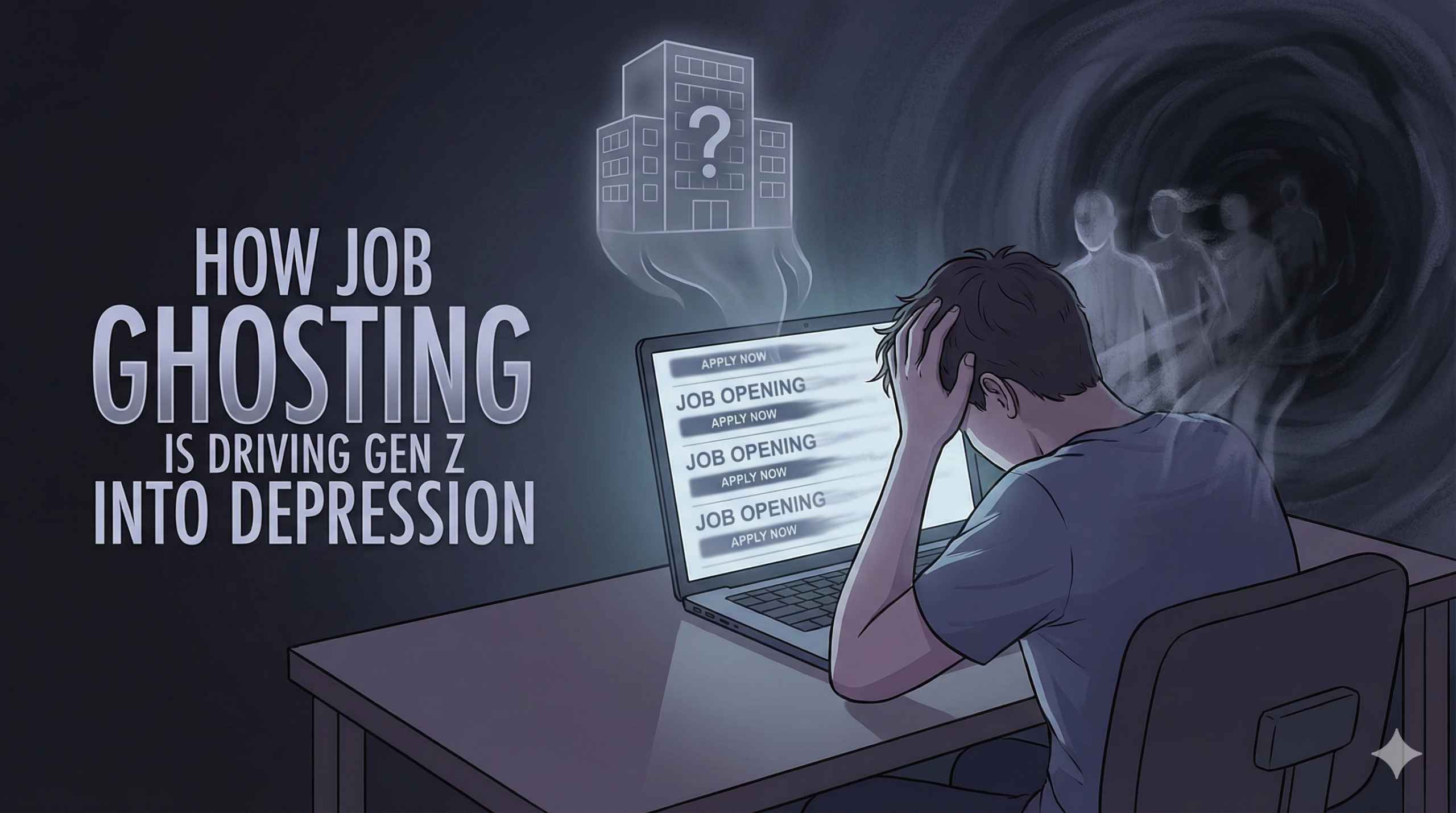
Although it seems like something from Halloween, the term “ghost jobs” describes the practice of employers posting job openings that don’t actually exist.

In certain situations, the jobs might not have ever been open, while in others they might have already been filled.

On both sides of the Atlantic, it is an actual and ongoing issue.

According to a study conducted in the US, UK, and Germany by recruiting software vendor Greenhouse, up to 22% of jobs posted online last year were placed with no intention of hiring.

The number was considerably higher, at 34%, according to a different UK study.

According to the US Bureau of Labour Statistics’ most recent official figures, only 5.1 million persons were hired in August despite there being 7.2 million job openings.

In the US, a jobhunting tech worker called Eric Thompson is making politicians in Washington DC increasingly aware of the issue.

Mr. Thompson, who has over 20 years of expertise in the software industry, was laid off by a start-up in October of last year. He applied for hundreds of jobs in vain over the next two months.

“I looked at everything under the sun, applying for positions at my current level, and ones that were more senior and junior,” according to him.

It dawned on Mr Thompson that some of the listed positions simply didn’t exist. Because of the incident, he formed a working group advocating for legislation to outlaw the use of phone employment advertisements in the United States.

In Pakistan, job ghosting has grown to be a major trap for Generation Z. Many young people apply to numerous positions, feel optimistic following interviews, and then never receive a response. 

Some people even fall for frauds and phoney job advertising that promise speedy hiring, only to vanish after stealing money or personal information. The quiet strikes hard. It erodes their self-confidence and makes them doubt their value. Depression sets in as family expectations grow and costs mount. Constant ghosting feels more like being invisible than rejection to a generation that is already attempting to prove itself.

He has led the development of proposed legislation known as The Truth in Job Advertising & Accountability Act while continuing to engage with members of the US Congress.

This requires auditable hiring records, expiration dates for ads when hiring is halted or finished, and sanctions for employers who post false or bogus positions. Mr. Thompson is hoping that the legislation will be sponsored by a few members of Congress.

Additionally, he launched a petition that has received over 50,000 signatures thus far. He claims that in addition to the signatures, he gets comments from people detailing how their mental health and confidence have been negatively damaged by ghost jobs. He calls it “shameful.”

The state legislatures of California and New Jersey are also considering outlawing phantom jobs.

But Ontario, a province in Canada, is setting the standard. Companies must reveal whether an advertised position is being actively filled as of January 1.

Additionally, Ontario is taking action to address the distinct recruitment problem of “ghosting,” which occurs when businesses fail to respond to applicants. Businesses in the province with more than 25 workers will now have 45 days to respond to an interview. They won’t have to get in touch with anyone they didn’t decide to interview, though.

Toronto-based employment attorney Deborah Hudson claims that businesses “trying to get it right” have already contacted her. However, she is worried about how the regulations will be applied.

After working in the construction sector for over 20 years, my pessimistic side questions how things are truly going.

There is no legal obligation to respond to candidates elsewhere in Canada, the US, or the UK. Additionally, neither recruitment ghosting nor ghost jobs are currently being addressed in the UK.

Ailish Davies, a job seeker from Leicester, UK, claims that it is “soul destroying” to be ignored by both large organisations and small businesses.

She continues: “The amount of time I’ve spent putting effort into tailoring an application, to hear nothing back, it knocks you down.”

Ms. Davies, who has over ten years of experience in marketing, recounts a time when a hiring manager enquired whether she was available for an interview; she responded, but she never heard back.

“Employers ought to show greater consideration for job applicants because

Jasmine Escalera is a Miami-based career coach and recruiter.

It was via the ladies she taught that she first learnt about ghost jobs. “They asked me if they should reapply after repeatedly seeing the same job advertised.

“They were trying to get into a black hole. Any job seeker’s morale is shattered.

So why do businesses advertise ghost jobs? Numerous explanations are suggested by Dr. Escalera’s research.

“We surveyed hiring managers, and found some companies post positions to create a talent pool,” she continues. “They’re not hiring right away, not because they don’t want to hire.

“Others, we found, were inflating numbers and trying to show their company is growing, even if it’s not.”

Dr. Escalera goes on to say that she has also heard of businesses advertising positions to collect and sell data.

Regardless of the motivation behind the bogus advertisements, Dr. Escalera warns that they are providing governments with an inaccurate image of the labour market, which has detrimental real-world effects.

We use data to analyse market patterns and build policies, so if the data is distorted in any way, we won’t be able to develop the policies or offer the assistance that workers and job searchers require at this time,” she says.

Dr. Escalera suggests that job seekers attempt to network with hiring managers in order to steer clear of ghost jobs.

“You will know a position is real if you’re having conversations with real humans who work at that organisations,” she continues.

But you should also watch out for warning signs, she says. “If you see that a job is being posted multiple times during a certain time frame, or that the job posting has been open for a while, then it is possible the posting is staying open because the job is not intended to be filled.”

Recent Blogs

High Stakes for CDA Mega Projects Tied to 2027 Summit Readiness
High Stakes for CDA Mega Projects Tied, As Islamabad's development plans pick up speed,
How world is evolving with new business strategies
How world is evolving with new business strategies while business is changing everywhere, and
90 Seconds clip earns $400 million, Baby Shark
A simple 90-second children’s song changed everything. 90 Seconds clip earns $400 million, Baby
Impact of Real Estate on Climate
Real Estate Market Outlook 2025 Impact of Real Estate on Climate is becoming impossible
Opportunities in Islamabad for developers
Opportunities in Islamabad for developers as Islamabad's real estate market is on the rise.
Punjab CM Approves Punjab Protection of Ownership Ordinance 2025
What does this ordinance mean? Punjab CM Approves Punjab Protection of Ownership Ordinance 2025,